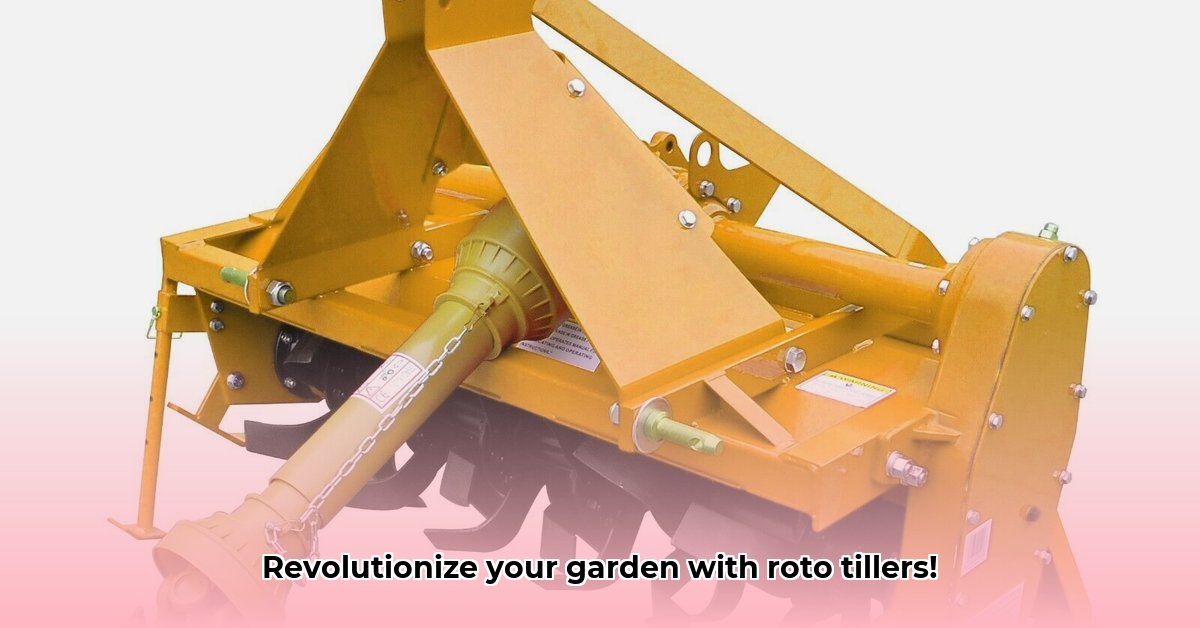
Roto Tiller Tractors: Your Sustainable Farming Partner
Sustainable farming practices are increasingly important, and a roto tiller tractor can be a valuable tool – if used correctly. This guide provides a step-by-step approach to using a roto tiller for sustainable agriculture, balancing its power with the principles of minimal soil disturbance. The key is precision and mindful application. Think of it as a surgical tool, not a demolition machine. Have you considered the long-term benefits of soil health over short-term gains in yield? For more information on compact tractors, check out this helpful resource: compact tractor info.
Choosing the Right Roto Tiller Tractor: Finding Your Perfect Match
Selecting the right roto tiller is crucial for efficiency and soil health. Consider these key factors:
- Garden/Farm Size: Smaller gardens need lightweight, possibly electric models. Larger farms often benefit from the power of gas-powered tillers. Choosing correctly avoids unnecessary expense and potential damage.
- Soil Type: Heavy clay soils require more powerful machines than lighter, sandy loams. A lightweight tiller on heavy clay will likely struggle and damage itself.
- Budget: Gas models typically offer more power but come with higher initial costs and running expenses. Electric models are quieter and cleaner but may lack power for challenging soil conditions. A well-researched choice keeps your costs reasonable.
- Specific Tasks: Preparing seedbeds requires less power than incorporating compost or breaking up compacted soil. A powerful tiller can be overkill for simpler tasks, while a smaller machine would be inadequate for challenging ones.
Here's a summary table of these key considerations:
| Factor | Considerations |
|---|---|
| Garden/Farm Size | Small garden: lightweight electric model; Large farm: powerful gas-powered |
| Soil Type | Clay: powerful machine; Sandy loam: lighter model |
| Budget | Balance cost with your needs; consider long-term maintenance costs |
| Task | Seedbed prep: lighter model; Compost incorporation: more powerful model |
Getting Ready to Till: Preparation is Key
Proper preparation is paramount. Before starting, clear the area of rocks, debris, and persistent weeds. Rocks can severely damage your tiller's blades.
Timing is also critical. The soil should be at the optimal moisture level – not too dry, not too wet. Overly dry soil is difficult to till, while excessively wet soil leads to compaction. Aim for a "just right" moisture content.
Mastering Tilling Techniques: Getting the Most from Your Machine
Effective tilling involves more than just turning on the machine. Here’s a step-by-step guide:
- Clear the Area: Remove all rocks, debris, and persistent weeds completely. This crucial step protects your tiller and significantly improves results.
- Adjust the Depth: Set the tiller depth according to your soil type and the task; start shallow and gradually increase if needed. Excessive depth can harm soil structure.
- Overlap Passes: Overlap each pass by approximately one-third. This ensures even tilling and prevents missed spots. Consistent tilling creates a uniform tilth.
- Avoid Over-Tilling: Minimize passes to prevent soil compaction. Less is often more when it comes to tilling. Over-tilling can damage soil structure.
- Incorporate Compost (Optional): Use the tiller to efficiently mix in compost or organic matter to enhance soil fertility and structure. This improves water retention and nutrient availability.
Remember, preparing a seedbed requires a lighter touch than incorporating compost. Different tasks call for different techniques and settings.
Maintaining Your Roto Tiller Tractor: Keeping it Happy and Healthy
Regular maintenance is key to your tiller's longevity. Clean it thoroughly after each use, removing any soil or debris. Sharpening the blades regularly is also crucial for efficient tilling and prevents damage to the soil structure. Follow the manufacturer’s guidelines for oil changes and other routine maintenance. Proper storage, protecting it from the elements, significantly extends its lifespan.
Sustainable Practices with Your Roto Tiller: Tilling Smartly
Sustainable farming prioritizes minimizing soil disturbance. Frequent tilling can disrupt soil structure, negatively impacting water retention and nutrient availability. Consider no-till methods wherever possible.
“Minimizing tillage is crucial for maintaining soil health and reducing erosion,” says Dr. Emily Carter, Soil Scientist at the University of California, Berkeley. “Cover cropping is a sustainable alternative for improving soil fertility.”
Integrating no-till practices with targeted tilling for specific tasks (like preparing small seedbeds) offers a balanced approach.
A Real-World Example: Sarah's Successful Sustainable Farming
Sarah, a successful organic farmer, uses her roto tiller strategically. She prepares raised beds for her vegetables, minimizing soil disturbance to the rest of her fields. Combined with cover cropping and composting, her method improves her yields while maintaining excellent soil health.
Remember, a roto tiller is a tool; responsible and mindful usage is crucial for long-term soil health and sustainable farming practices.
How to Choose the Best Cover Crops for No-Till Farming in Diverse Soil Types
Choosing the right cover crops is essential for successful no-till farming. Understanding your soil type is the first step. Consider soil texture, pH, nutrient levels, and existing weeds. Different cover crops excel in different conditions.
- Legumes (e.g., clover, alfalfa): Fix nitrogen, improving soil fertility.
- Grasses (e.g., rye, oats): Excellent for erosion control and improving soil structure.
- Brassicas (e.g., radish, mustard): Break up compacted soil.
Consider using a mix of cover crops to maximize benefits. Proper planting and management, including timing and termination, are also crucial. Roto-tillers can still have a role in targeted applications within a no-till system, but minimize overall tilling.